
The Newest Voice in Padel: We spend a day with Emily Kilner.
WORDS
Lee McLaughlan
PHOTOS PROVIDED BY
Emily Kilner
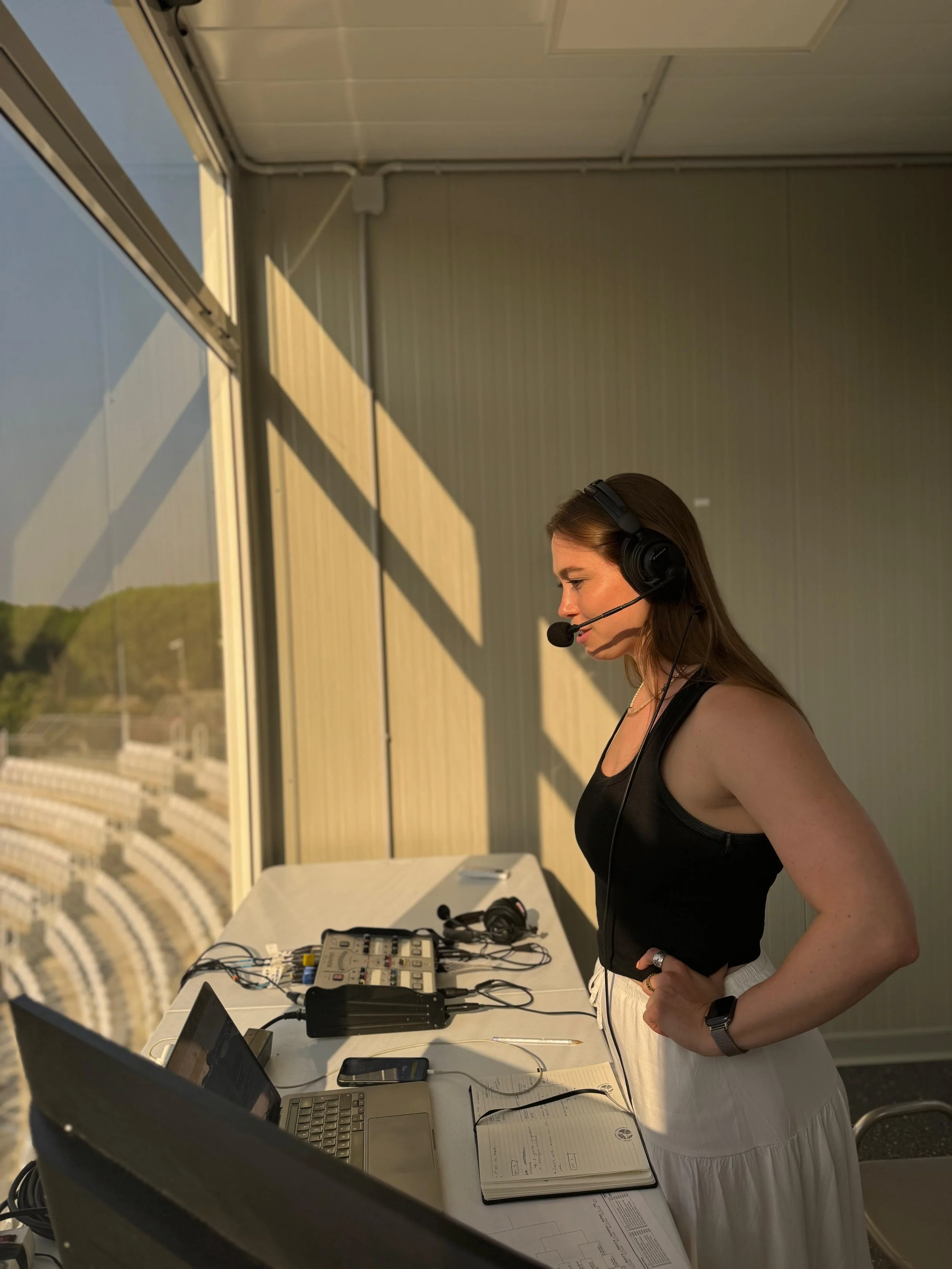
As the Premier Padel season zooms towards the end of season finale to crown this year’s champions, for one individual it has already been a memorable year.
Emily Kilner has made her mark on the padel scene this year as the new voice of padel for Premier Padel’s English listeners and viewers.
The 28-year-old will be calling the shots, literally, when the world’s best players compete in Barcelona in December.
It was an unlikely scenario at the start of the year for the ever-smiling young Englishwoman, who was combining a day job with AB InBev with a range of presenting and broadcast duties in padel and hockey.
Emily’s padel journey began three years ago when she was Googling the rules of padel for a docuseries. Today she is mingling with the world’s best players.
Her star is certainly on the rise and many observers see Emily as a leading ‘Voice of Padel’.
Host, interviewer, commentator, nothing is beyond Emily who can confidently carry off all three roles with aplomb not only in her native English but also fluently in Spanish.
As the interest in padel has grown, so has her own padel career.
She called time on her role with drinks company AB InBev midway through 2025 to fully focus on a broadcasting career. She splits her time between padel and hockey, of which she is an accomplished player. In addition, she is undertaking a 12-month mentoring programme with the world renowned BBC, having been one of only two people successful from thousands of hopefuls.
Securing the Premier Padel gig has definitely played a significant part in her decision to switch from the office to the commentary box full-time but it is one that she still finds difficult to accept.
Emily said: “Premier Padel were looking for more English-language coverage, and I’d built up a bit of a profile from my padel work in the UK, plus what I’d done in hockey.
“They wanted somebody who understood padel, knew the rules, knew the players, was excited about the game, was able to talk about it enthusiastically and know what was going on in the wider context of the padel world.
“My first tournament was the Gijón P2 earlier this year. I was nervous, but it was amazing and definitely the biggest thing I’d ever done in padel at the time.
“Eight months on from that and I do have to pinch myself sometimes,” she says.
“To be paid to talk about padel, it’s just incredible.”
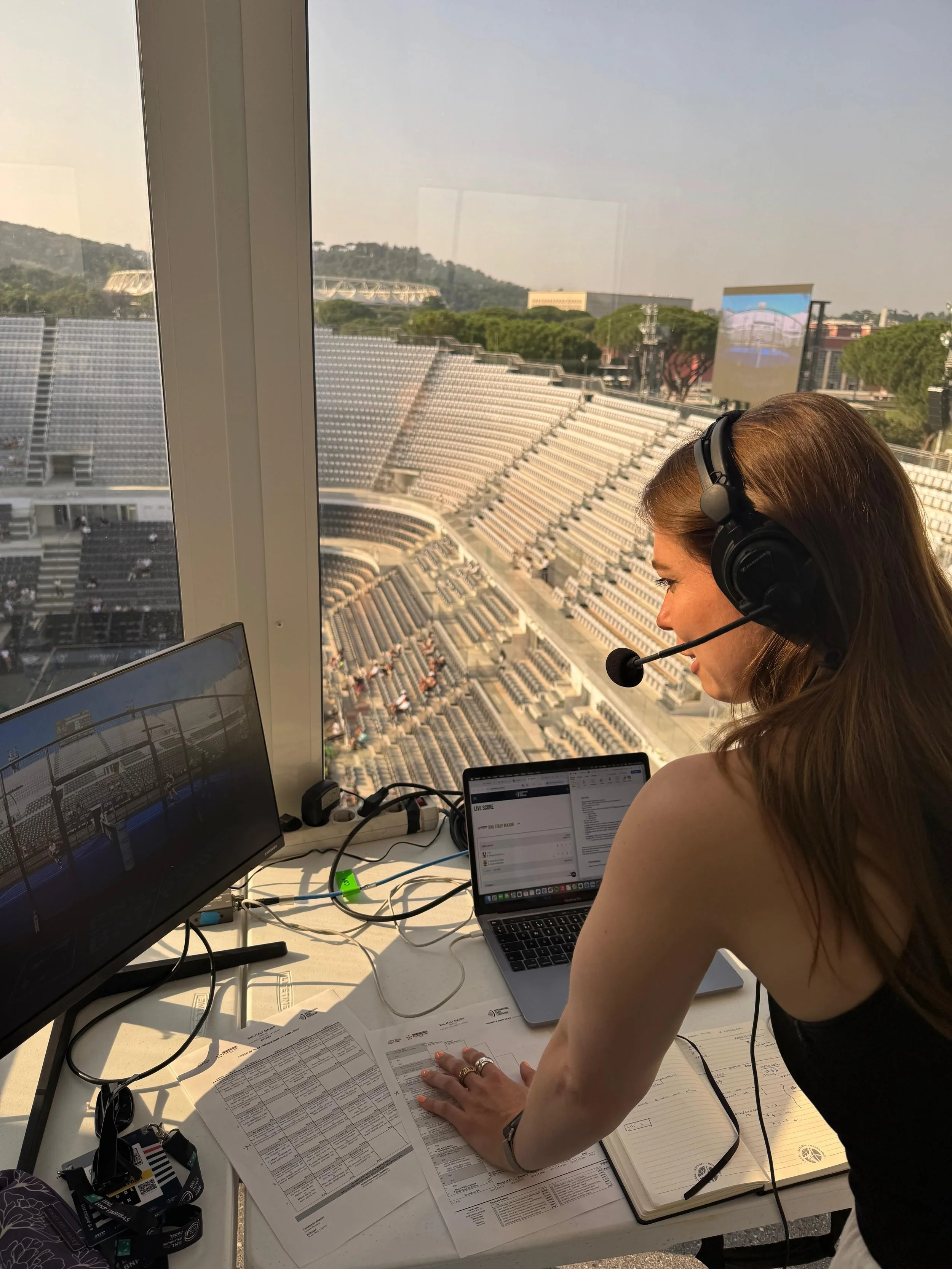
Since that first Spanish outing at the end of February, Emily has followed the Premier Padel journey across the continents, including commentating at the Italy Major in the stunning Foro Italica in Rome and the Paris Major at the iconic Roland Garros.
Emily has grown into the role and has deconstructed what a ‘typical’ day involves for her when she’s on tour.
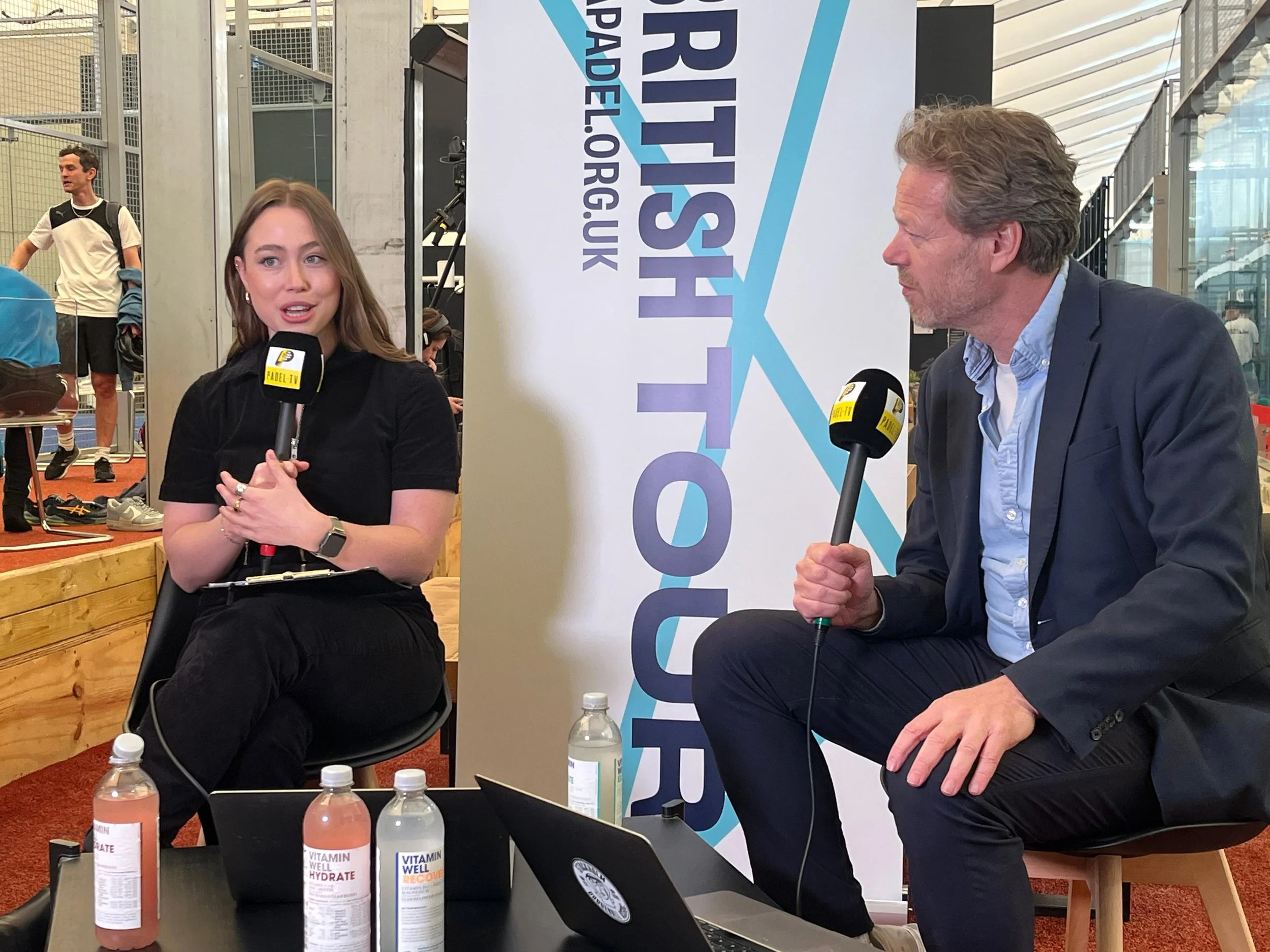
Morning – checking the vibe
A typical day at a tournament, particularly a major, starts early.
She prefers to do most of the prep well in advance. “Preparation is absolutely key,” she says. “If I’ve got three matches in a day, that’s 12 players I need to know inside out.
“I want to wake up clear-headed and focus on the vibe of the day, the court conditions, the atmosphere, and any breaking news or storylines.
“I’ll meet up with fellow commentators, I’ll catch up with the Premier Padel press office team, while looking for any useful insight from the players and coaches if they are around.”
Emily has also built what she calls her “bank” of player profiles: concise sheets filled with stats, stories and personal nuggets. “I’ll note their age, ranking, previous playing partners, style of play, signature shots and even quirks like their celebrations or court habits,” she explains.
“Then I’ll have sections on what’s happening across the wider padel world, things like the Premier Padel standings or upcoming tournaments. Those are your lifelines when you need to fill space or add context.”
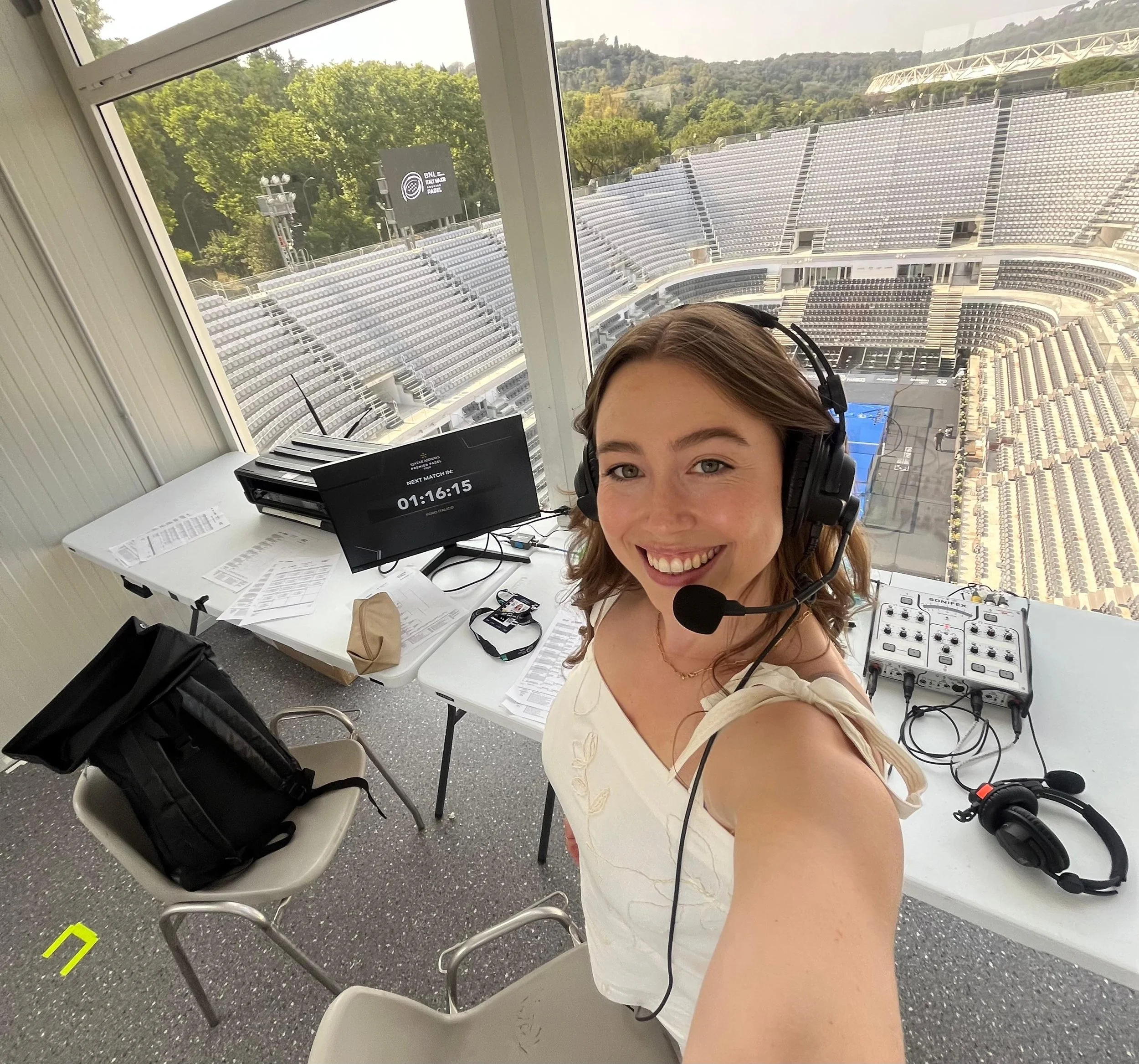
Afternoon – on air
“I usually head up to the commentary box about half an hour before my first match,” she says. “You do a sound check, make sure your notes are in order, and take a deep breath.
“You have to remember that people can see what’s happening, so unlike radio, where you describe every shot, in padel commentary it’s about adding colour, context, emotion, personality. Why this match matters. What’s at stake.”
Her commentary style balances insight and enthusiasm. “Early in a match, I like to tell stories about how players got here, what’s unique about them. Then, as things get tense, I focus more on the rallies and big moments. When there’s a spectacular bandeja or a long rally that ends with a winner, that’s when I let the energy rise. You can build excitement with your voice as much as with words.”
If it’s back-to-back matches, it’s a case of repeating the process until there’s time for a break, when the day is far from over.
“Sometimes I’ll plug into another commentary, especially the Spanish coverage, and learn a lot just by listening,” she says. “Other times, I’ll walk around the venue, film some content, or just soak up the atmosphere. I’ll also use breaks to update my notes for the next match or talk to other journalists.”
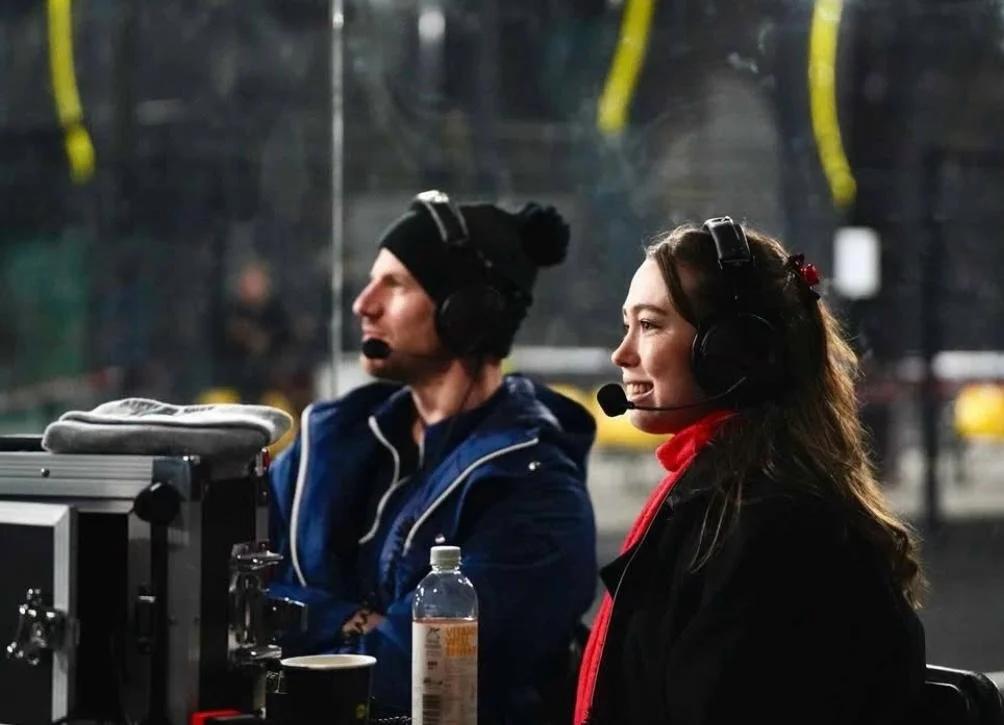
Evening – the crescendo
The atmosphere changes come the evening, with a fresh crowd and normally the star players reserved for the largest viewing audience.
It is also when a commentator needs to find that fresh impetus as if it were the first minute of the day as sometimes play can stretch beyond midnight, as it did in Italy this year.
Once the match is over and the crowd has gone home, it’s time for reflections.
“I’ll go back through my notes, see what I did well, what I could improve,” says Emily. “I want every session to be a little better than the last.”
Despite the demanding schedule, her enthusiasm never fades. “Honestly, this is my dream job,” she says.
As the Premier Padel season nears its conclusion in Barcelona in December, Emily has reflected on what she has achieved so far and what the future potentially holds.
“I have to remember this is my first year and to not put too much pressure on myself.
“Right now, for me, it's focussing on the quality of what I'm doing, getting as many opportunities as possible with Premier Padel and all the other events that are happening in the UK to continually improve.”
And what about becoming the ‘Voice of Padel’?
“One day I would absolutely love to have that kind of profile but I'm still very early on in my career.”
ABOUT THE AUTHOR
Lee McLaughlan
Lee has over three decades of sports journalism and PR experience, including a senior comms role with the British PGA. He is the founder of sports-based PR agency Sweetspot Communications and a freelance journalist.
Read more stories
FEATURE
Emily Nutbean
Real estate woes force operators to get creative as prices rise.
FEATURE
Lee McLaughlan
A fully automated 24/7 facility offer players something hard to find: privacy.
